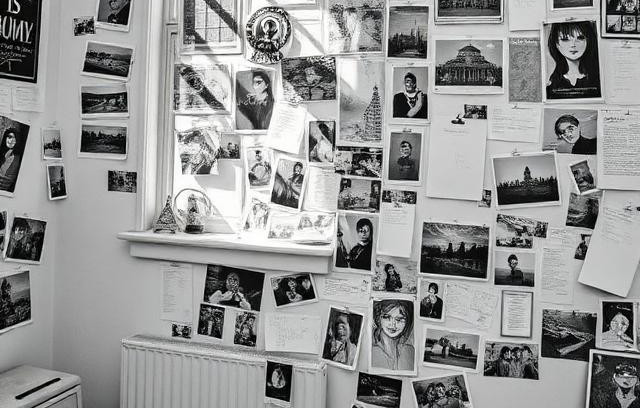
Observation in the Art of Writing

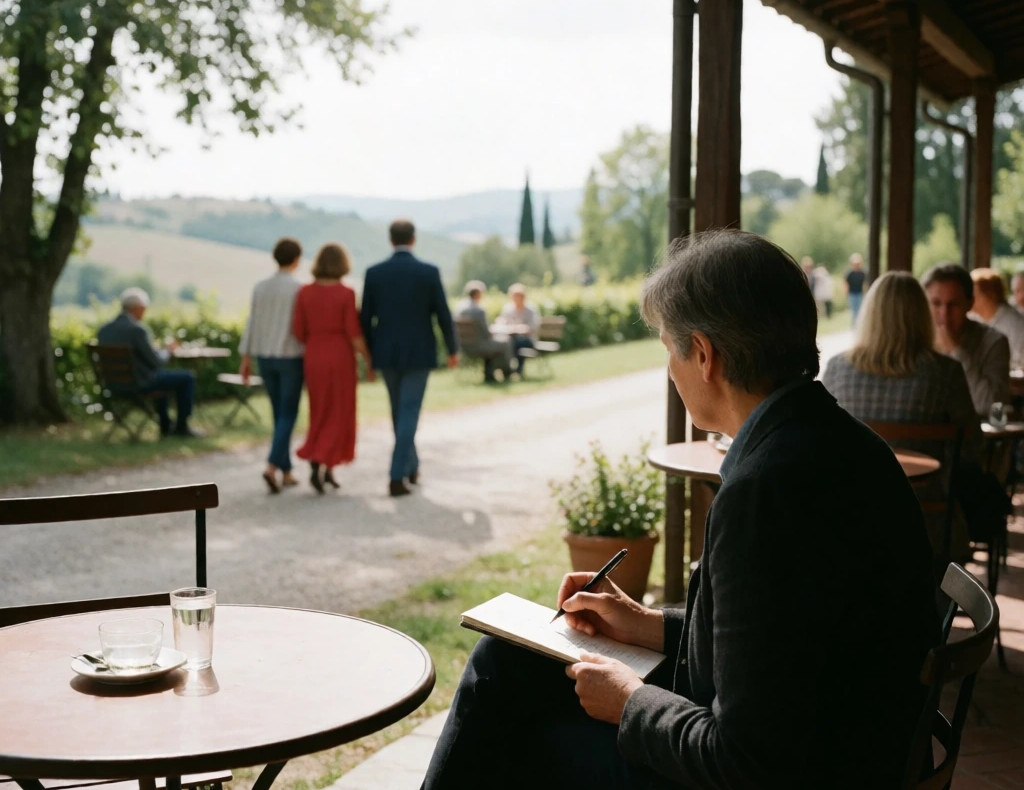
Writers collect details that everyone else walks past.
Creative writing is an art form. It stimulates the reader’s thoughts, emotions, beliefs, and ideas through the creative use of words to convey the authors ideas. But, like all good art forms, it is underpinned by the creator’s observations and experiences - we’ll ignore abstract painting, okay?.
- Photographers, and painters need to be aware of light, and form.
- Sculptors need to be aware of form, texture, and structure.
- Film-makers need to be aware of light, movement, environment, sound, and human relationships.
As writers, we need to be aware of light, movement, relationships, behaviours, sound, texture, shapes, smells, taste, emotions, cause and effect, and more. Writers need to be good observers of everything, to understand how it all works, and thereby make our writing that much more believable and rich.
No matter what type of writing we’re doing, observation is essential for conveying the story in a believable manner and creating an rich environment in which your characters can exist. We need to notice stuff.
- Memoirs: Being a record of people, events, and places, a memoir is almost all observation.
- Poetry: Most poetry draws heavily on observations of all types to efficiently build the emotional response in the reader.
- Fantasy and other made up stuff: Fantasy and science fiction need observation of the real world in order to help the reader understand the new worlds described, the new types of relationships, and to extrapolate from the real world to create plausible new worlds.
OMG – This all sounds a bit pretentious! Sorry.
Why observation matters
Observation and noticing things allow us to infuse our writing with the small details that suggest a deeper richer experience/environment/personality without having to describe absolutely everything. We want to share the creative process with the reader and allow them a role in building the world, but based on suggestions we give them about the feel of the world and the relationships between the people inhabiting it.
By sharing small, often mundane details, we can convey far more to the reader through their associations with what those details can signify.
Keli drummed her fingers on the table, or tried to. It turned out to be difficult. She stared down in vague horror. Cutwell hurried forward and wiped the table with his sleeve. “Sorry,” he muttered, “I had treacle sandwiches for supper last night.”
“Mort” – Terry Pratchett
Noticing Stuff
To help add depth and vividness to your writing, take time to notice the little details that evoke a particular feel of a place or emotion. Often it is the little details that would otherwise go unnoticed that capture the essence of the world when you try to describe it.
It is helpful to observe cause and effect if the opportunity presents itself. This all helps us understand the world and allows us to better portray events and backstory in our writing. For instance, you know that a character was turned down for job or something they were really excited about. How do they feel? Delve into your own feelings when in the same situation, or observe how others react to similar disappointments. Is an adult going to react the same way as a kid?
In a way, try to notice your sixth sense; feelings of foreboding, a shiver down your spine, and the feel that someone is watching you. All these observations about feelings are great for foreshadowing.
Observations are everywhere. It’s not just about your senses. Noticing how systems work, structures, and hierarchies is valuable for creating plausible organisations, and rich pickings for parody. Here’s a great example of noticing how committee meetings run. Luckily, the committees I belong to seem not to have a Mr. Windling in them … yet … or, horrible thought, maybe it’s me.
The best way to describe Mr. Windling would be like this: you are at a meeting. You’d like to be away early. So would everyone else. There really isn’t very much to discuss, anyway. And just as everyone can see Any Other Business coming over the horizon and is already putting their papers neatly together, a voice says “If I can raise a minor matter, Mr. Chairman…” and with a horrible wooden feeling in your stomach you know, now, that the evening will go on for twice as long with much referring back to the minutes of earlier meetings. The man who has just said that, and is now sitting there with a smug smile of dedication to the committee process, is as near Mr. Windling as makes no difference. And something that distinguishes the Mr. Windlings of the universe is the term “in my humble opinion,” which they think adds weight to their statements rather than indicating, in reality, “these are the mean little views of someone with the social grace of duckweed.”
“The Truth” – Terry Pratchett
Here’s another great example of small details, that serve to give the impression of a very tidy modern kitchen.
There’s a kind of ease in darkness, a soft, blurring quiet that smudges the lines between one person and another. The broad light of a kitchen is quite a different matter. When Clare stopped crying and we walked out and stood among shiny surfaces and sharp edges, I suddenly felt charged with prickly nervousness, like static electricity; if I touched Clare, I believed we’d both get a shock.
“Love Walked In” - Marisa de los Santos
What say we change some of the same details? What if the kitchen lighting was the warm glow of candles, the benches were worn wooden slabs, and there were strings of onions, and old soot encrusted pots hanging from hooks over the benches. This gives a very different feel, and would probably require us to adjust how the characters feel in response to being in this space – relaxed now, instead of electrified.
As well as things to observe, also notice absences, and things that aren’t said.
| Don’t just notice … | Also notice… |
| what something looks like | what it smells like |
| what someone says | what they avoid saying |
| what happened | what nearly happened |
| the object | how it’s been used |
| the room | what it says about its owner |
Looking for Stories
If you recall our session on Inspiration, what you observe can be the starting point for a story. Stories can come from the smallest things, be it the surreptitious glance someone gives another customer in a café, or the way the photocopier always misbehaves when a project needs to go out the door. Great stories don’t always begin with a massive plot twist, or a life and death struggle, it could just as easily start with a quiet observation: the way paper litter drifts against a tree, or a scrap of overheard conversation.
Object Archaeology
Artefacts have their own stories. For example, have a look at how a pair of shoes have worn down. What does that tell us about the way the owner walks, or where they’ve been? Consider what may have caused the effect that you see on a particular object. Dents, scratches, chipped paint, are all suggestions of a previous history of use and abuse.
Contrast Hunting
Look for incongruities. There will always be details which don’t quite fit. If you’re somewhere you’d consider ugly, what can you see that’s beautiful? Is there somewhere messy in a pristine location?
Micro Moments
Noticing events happening in small, brief instances in time can be useful to create drama in your writing. You can use them when pacing a story, to slow down time. For instance describing the instant a glass of red wine tips over and spills onto the white rug, can focus attention on a transition in a relationship, or act as a symbol of something spoiled.
Reading the Room
There’s reading the room, which is useful for people observation, but what we mean here is reading the actual room or environment for those little details that tell a lot about the person or people who occupy that space. In an office cube-farm, do people have mementos of home scattered around their workspace, or is it sterile? What does that say about the staff and management? Is the flat occupied by a complete slob, or someone who is barely there? You will have seen small details in the places you’ve been, that you can pull on to give you an idea of the history of that place and those who live there. When trying to capture that in writing, you need only describe some of these small details to give an impression you want to convey. An exhaustive description isn’t required.
“The world stops being background noise and starts becoming a story reservoir.”
Practical Habits
A useful observation can crop up at any time, and so it is worthwhile being ready to receive them. Be prepared to be a hoarder. The things you capture at the time may prove useful at a later date.
- Carry a Notebook: Capture stray observations, images, thoughts or overheard phrases.
- Slow Down: Take time to notice things that most people will miss; the faded graffiti on the corner, the daily quote outside the bookshop, the smell of bread from the open door of the bakery.
- Change Perspective: Sit somewhere new.
- Listen: People’s word choices, accents, and silences will reveal information about their internal thoughts, their background, and emotions.
- Observe people: Notice people’s behaviour, mannerisms, and conversations, and think about their relationships, emotions, and motivations.
Sources
- “Observation & Perception: Seeing the World Through a Writer’s Eyes”
- “The Art of Observation: How Great Writers Find Inspiration in Everyday Life”
- “To be a good writer, be an observer” By Rauf Fadzillah
- “Observing and Using Observations”
Writing Challenge: Observation
Here is a selection of challenges of different lengths which use observation as a starting point. Choose one that appeals and see what you can come up with.
Five Minutes
Just do a quick observation exercise. It could be;
- collect ten overheard phrases,
- describe one object using all five senses (although use taste with caution),
- watch people in a café for ten minutes.
Thirty Minutes
Write a scene or 300-word vignette based on an observation from the previous exercise, or something fresh and new. It could be something like writing a scene from a particular object’s past. For instance, maybe you have an heirloom object at home. Describe a scene from your family history where that object would have been present – perhaps use it as you set the scene.
Several Hour Challenge
Take an observation and develop it into a complete story, memoir, poem, or essay.