Sources of Inspiration

Coming up with new ideas for a story is something I find fun. There are no end of sources to gain inspiration from. As with any creative project where you have control over the whole process, there is always a brainstorming phase where you go wild with ideas, and then narrow them down from there, before getting down to the detailed work of realising the selected idea as a finished product. The process is the same whether you’re writing a short story, coming up with a new product, making a movie, or building a dairy factory – obviously the inspiration sources are different – although with some product designs, one wonders.
This article is about sources of inspiration, with particular attention to using other creative works for inspiration, and how you can turn the ideas into something that is uniquely yours.
Drawing inspiration from other creative works
There’s nothing wrong with drawing inspiration from other other peoples’ creative works. How many re-imaginings have you seen of Shakespeare, or retellings of Fairy Tales? You can take ideas and inspiration from novels, poems, songs, movies, paintings, sculptural works – anything.
What’s There to Provide Inspiration?
Plot Structure
Why not just take the whole story structure? The classic example is The Hero’s Journey, but taking folklore and legends as a starting point for shaping new stories, is a commonly used source. The ATU-Index or Motif Index are massive collections of folktales, and myths paired down to their most basic elements, and useful to sift through to get ideas for new stories.
Retelling one of Shakespeare’s plays or Charles Dickens’s A Christmas Carol has been done many times before, and are instantly recognisable structures. Well know classic’s lend themselves well to being used as inspiration or starting points because they are familiar to most readers, and your spin on it, can make for an interesting ride for your readers.
Characters
This is where a character from another’s creative work can be pulled into your own story or setting. For example, Arthur Conan Doyle’s Sherlock Holmes has found himself involved in H.G. Well’s War of the Worlds, gotten caught up in H.P. Lovecraft’s Cthulhu Mythos thanks to Neil Gaiman, met the Giant Rat of Sumatra, and even been cast as a mouse.
Setting
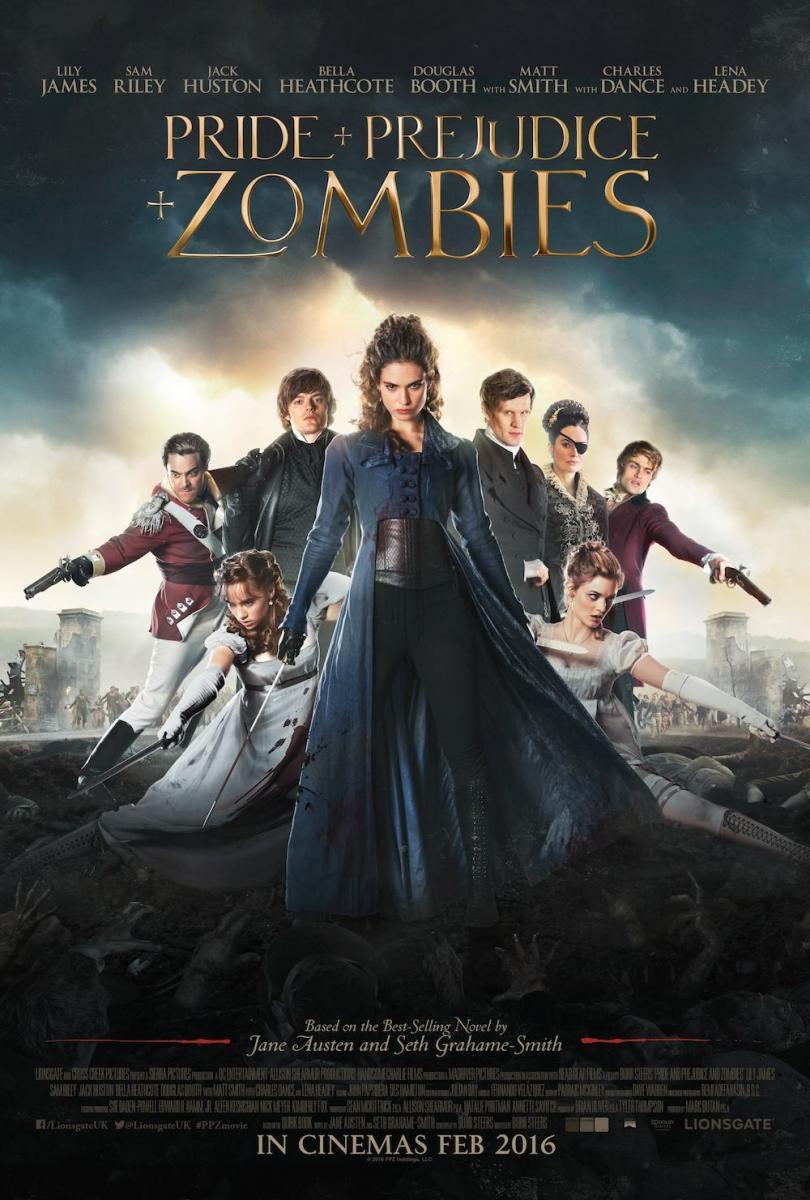
Using a setting from another creator’s work will immediately give the reader a familiar background, mythos, and logic of the world. The author doesn’t need to set this up. A good example of a well used setting, is Jane Austen’s world set among the landed gentry of the later half of the 18th century.
An important part of using another’s setting is to ensure your details are correct and true to that world, or, in other words, it is canon. Readers may get annoyed with a work that goes against canon, particularly in fantasy and science fiction settings.
Real People and Events
Pick up a Newspaper, or magazine, and write a story based on the people or events described in an article that takes your fancy. Obviously there is some risk in doing this, if the people featured, recognise themselves in your story, and are not amused. The key phrase here is “based on.” Use real people as an inspiration but make them unrecognisable in your story.
The exception to this, is people who have been dead a while, or in the case of Elvis, probably dead a while. So Queen Victoria, Julius Caesar, James Cook, Tokugawa Ieyasu, are all fair game. This is the realm of historic fiction.
Themes and Motifs
Inspiration for a story can come from the overall theme of another creative’s work. Maybe you’ve read a book where the central theme is around redemption of the main character, and so you feel inspired to write your own story about redemption. One example is taking inspiration from Aesop’s Fables and creating a whole series of new and updated fables. Peter S. Beagle, did this very nicely with his The Fable of the Octopus, The Fable of the Ostrich, and The Fable of the Moth.
Or it could be a detail from a story, such as the personification of death turning a character’s hourglass over to give them another shot at life, that you pick up and use in your own story.
Writing Style
Writing in the style of another author is quite a challenge, because you need to emulate the words and phrases they use. Inspiration can also come from emulating the style of documentaries, sports commentaries, travel guides, and a host of other sources. Have you ever tried writing in the style of David Attenborough, or the WWF commentators, or RNZ interviews? Believe me, it’s good fun. Once you get the voices of the particular presenters in your head, the words, phrases, and mannerisms just begin to flow.
What To Do With A Pinched Idea
So you have some ideas and inspirations that you have drawn from another creator’s work. What do you do with them?
Once you have absorbed the ideas, ruminate on them for a while. Mull them around and decide how closely you want to follow the original material or if you’d prefer using it to provide a rough shape to your own creation. Do you want to parody the original work, or pay homage to it?
Techniques for creating your own work based on the original material can include transposing the story or idea into another historical period, culture, or genre. A shift in perspective, or different point of view, are also common techniques for creating unique new stories from another creator’s material.
Fan fiction
Where the transition from characters and settings from another creator’s work goes from being a story based on […] to being considered fan fiction, is anyone’s guess. But, like basing a story on another creator’s story or elements within their story, fan fiction benefits from inheriting all the reader’s prior knowledge of the settings, characters, and events that take place within the fiction they’re already familiar with. That’s a lot of work that the author can reasonably safely take as read, literally.
In fan fiction, you’re working with an established, and usually, very popular franchises, such as Star Wars, Ghostbusters, Twilight, Harry Potter, or Jane Austen’s novels. The characters, settings, universes, histories, and backstories, are well known. There is a great deal of knowledge in the readership that the fan fiction author doesn’t have to develop themselves.
Inspiration from the Senses
As with any creative project, writing benefits from good observation. For writing, using all of the senses to observe will help inspire vivid writing as well as unlock new ideas. Colours, textures, sounds, smells, all will spark memories and fuel your imagination.
Music
Music is great for blocking out unwanted noise when trying write, but it is also a strong stimulator of ideas and inspiration. Music can evoke particular moods, and call up memories and associations you can use in your writing.
Playing music from a regular playlist you’ve compiled for your writing project can remind you of where you were up to in your project if you have left it for a while. This can be helpful for achieving continuity.
Music can be part of the ritual which helps you quickly get into the writing zone.
Playing music while you write can provide;
- Emotional resonance: Music carries emotion, which can be channelled into your characters, their interactions, the scenery, and events in your story.
- Rhythm and flow: Tempo and phrasing in the music can also help achieve the pacing, and cadence you want in a particular piece.
- Memory and nostalgia: You may find a specific song brings to mind past experiences, that can be drawn on to add authenticity and depth to your writing.
- Enhanced focus and productivity: Music that doesn’t intrude into your thoughts, can create an ambience that minimises distractions and enhances concentration. Instrumental or music in a language you don’t understand can be effective in this way.
Visual Art
We’ve used images as prompts before. Aside from what the image is of, they can carry mood, emotion, symbology, colour themes, and stories.
In paintings, the way the artist has used brush strokes, and colour choices can invite interpretation and associations.
The shapes of objects, such as ancient tribal art, or modern sculpture, can all inspire stories.
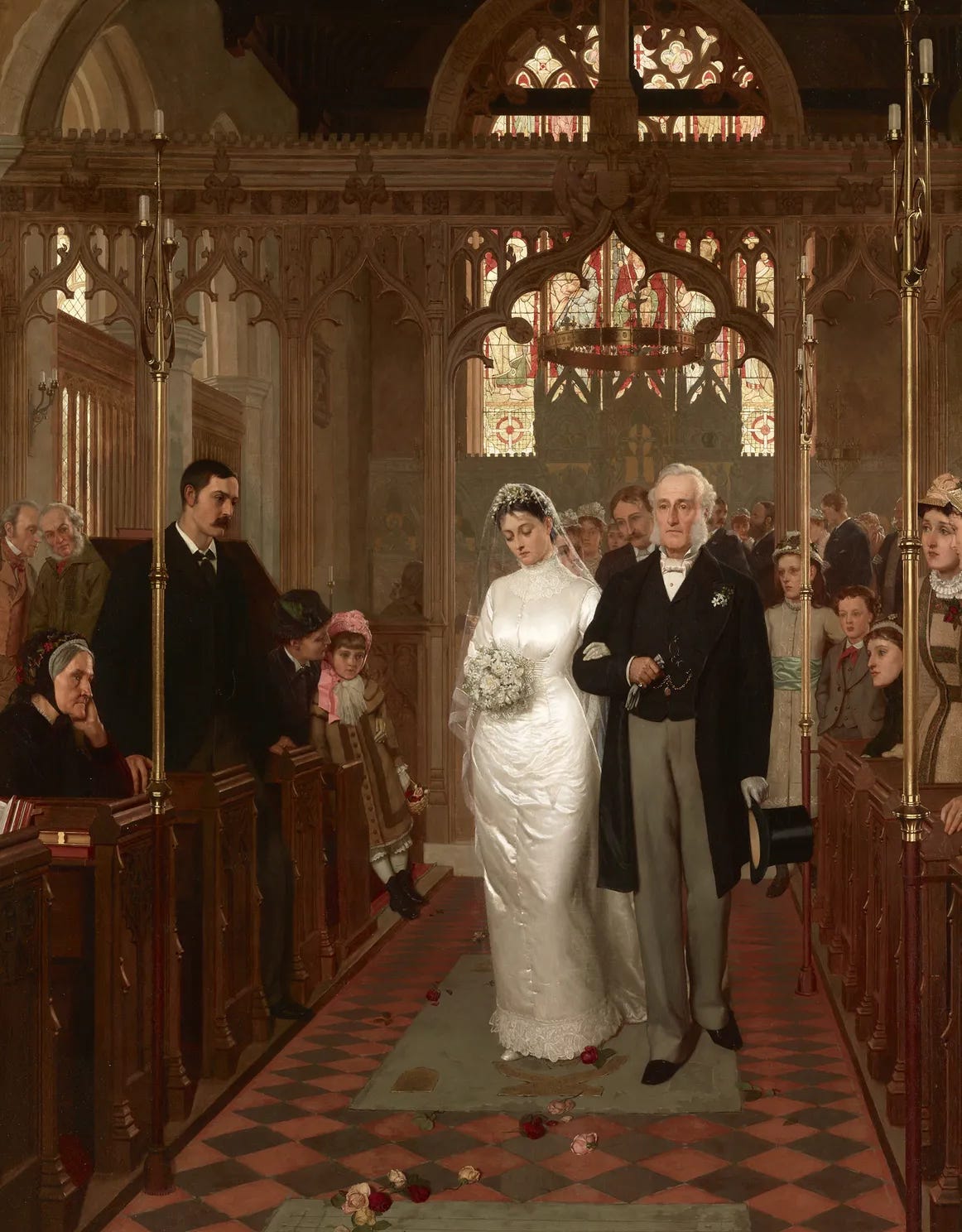
Till Death Do Us Part, by Edmund Blair Leighton, 1878
Go for a walk
This is almost an exercise in mindfulness, or if you are jogging or engaged in more repetitive exercising, it is what I think of as a moving mantra. You can let your mind freewheel.
As you walk, you can pay attention to the world around you but leave off judgement, or whenever your mind starts digging into your list of tasks for the day, gently guide it away. When we’re in this state, we tend to have stronger sensory memories, which we can carry into our writing projects.
Personal experiences
Of course, your own experiences will also provide a good source of inspiration even if you’re not writing a memoir. Experiences of joy, challenging situations, pain, and all other feelings will provide unique insights that will resonate with your readers. You will be able to call on these experiences to help flesh out encounters, scenes, and atmospheres in your narrative with vivid detail.
Mining your old, abandoned stuff
Most writers will have a pile of discarded material they’ve written in the past and been unhappy with. There will be gems within these pieces that were good, or sound ideas that, given a bit of polish by the more experienced writer you’ve become, could yield a good story or sub plot.
Engaging with creative communities
This isn’t a pitch for this writers’ group, but being involved in such a group allows for sharing of ideas that can enrich your writing and inspire now stories. If they have writing challenges, then, all the better to get you writing – okay that was a shameless plug. But the Horizon Research “Writers’ Earnings in New Zealand 2020”, found that New Zealand writers consider being part of a writers’ group was the second-most valuable activity for helping improve their writing. The most valuable was having a more experienced writer as a mentor.
RPG Sources
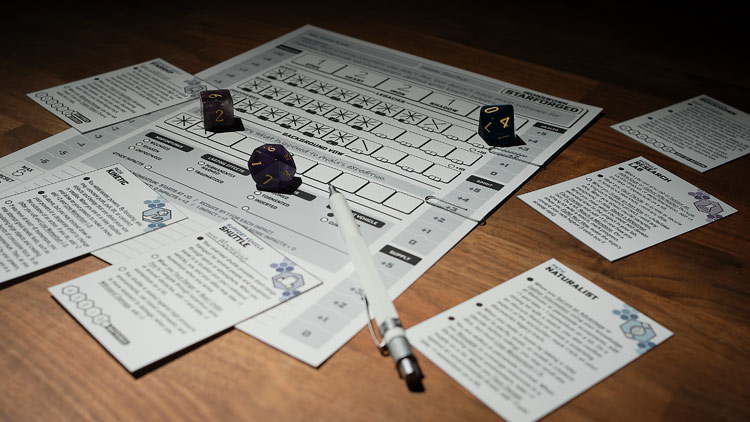
As you have probably gathered, I use RPG (Role Playing Game) source books and tools a huge amount in my own writing. These are designed with roleplayers (which I’m not) and creative writers (which I like to think I am) in mind. These give scenarios, random tables, and probability determination mechanisms, that can be used to shape and disrupt your story-telling. In addition to this there are the various solo role-playing systems that have been developed to allow one to create stories of complexity and depth without any other outside input, using oracles, and look up tables. A lot of these came into being around COVID time.
The source books can give inspiration for starting points, the random tables for challenges encountered along the way, and the oracles for really creating imaginative intrusions into your narrative. Think of it a bit like improvisation writing, but having some control over the story which keeps it consistent.
The best thing about this approach, is that all of these tools allow me to create something that is uniquely my own.
It could be argued that my interest is in collecting RPG systems. But ignoring that, here is my recommendation for RPG systems that are useful for storytelling.
Mythic: Mythic, is a standalone system of oracles, that allow you to create stories in whatever genre you like. The stories you create will have depth, and complexity that you never thought possible, and yet they have all come from youself with some nudges from the oracles. You can find it here: Mythic Game Master Emulator - Second Edition
Starforged: This is part of the Ironsworn “universe” of solo role playing systems. It is science fiction, but some of its “family” are fantasy or pirate fiction. Again it uses oracles and vast amounts of lookup tables to shape stories.
There are a heap of other RPG systems covering any genre you can imagine. These include mysteries, adventure, cyberpunk, high fantasy, and many more. Some include methods for creating mysteries on the fly which even you, as the writer, have no idea how they’re going to resolve. It is only through using the tool that the mystery will be revealed.
Yes, I can be accused of collecting RPG systems and rules, and some of them I genuinely use for story creation. Others, will be used eventually, maybe. Whatever, the fact is that these systems provide inspiration, both at the high level as well and the detailed level when they give me details I wouldn’t have thought of, or events that I didn’t foresee and have to accommodate into my storytelling. This keeps it interesting for me, as well as introducing twists and turns that ensure the story isn’t too contrived.
To Summarise
Inspiration for creativity can be found anywhere. The more places you look the more you will find, and the more diverse the ideas that will be spawned. Whatever your creative project is, there is always a need for inspiration to help enrich the narrative or shape the story. Some of the greatest sources of inspiration are other creative works. These can provide a springboard for your own work or invite reinterpretation or addition of another perspective.
As with any art form, being a keen observer of the world around you will energise and enrich your creativity.
Sources
“How To Steal Like A Writer (And Get Away With It)” - Susanne Bennett
“What To Do With Abandoned Manuscripts” – Susanne Bennett
“6 Creative Ways to Find Writing Inspiration” - Nicolas Moinard
“The 6 Best Sources of Inspiration for Developing Your Book and How to Use Them” – Hailey Amare
“How Music Inspires and Powers Your Writing” - John Preston
“Music To My Ears… And Writing” - Lis Maestrelo
“Writers’ Earnings in New Zealand Report” – Horizon Research
Writing Challenge: Sources of Inspiration
Consider using nature, personal experiences, or even everyday objects as inspiration for your writing challenge. Write a short story or scene using one of the following for inspiration, or your own preferred source. Your piece can be as long or short as you like, but something about 500-1000 words should work well.
Nature
- Take a Walk: Spend time outdoors and observe your surroundings. Write about a character’s day influenced by the sights and sounds of nature.
- Describe a Scene: Focus on a specific location, like a park or beach, and create a vivid scene that captures the essence of that place.
Personal Experiences
- Second-hand Store Find: Visit Mollies Place or a charity shop and choose an interesting item. Write a story about its past owner and how it ended up there.
- Memorable Events: Reflect on a significant moment in your life. Use it as a backdrop for a fictional story or character development.
Everyday Objects
- Object Story: Pick an ordinary object in your home and write a story from its perspective. What secrets does it hold?
- Dialogue Inspiration: Listen to snippets of conversations around you. Create a story based on overheard dialogue, giving life to the characters involved.
Music
- Pick a song that evokes strong emotions or tells a story. Write a piece inspired by the lyrics, mood, or theme of the song.
Image
- Find an image that suggests a story or a character from any source you like. Write a piece influenced by something in or about the image you have selected.