Turning Ideas on Their Head
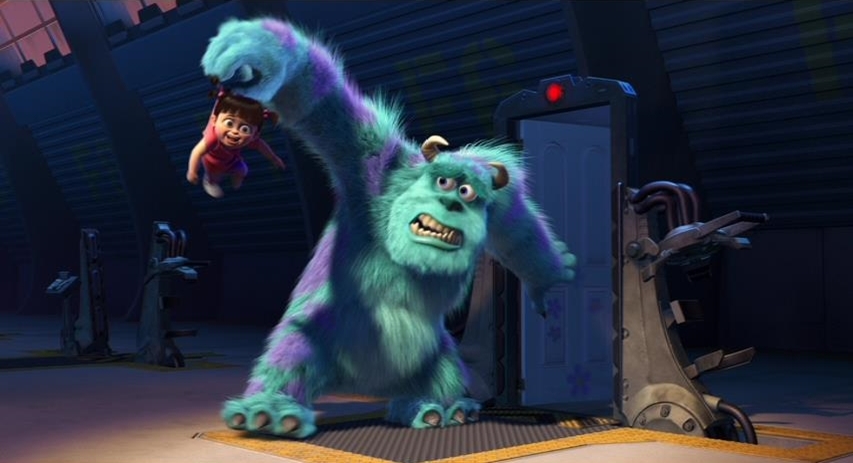
Monsters Inc. A good example of an inverted trope.

Turning ideas on their head, covers a whole suite of methods for thinking about an idea from different angles. These include inverting and subverting ideas, substitutions, juxtapositions, lateral thinking and asking what if … These are useful tools for mystery writing, and underpin humour, and speculative fiction. This is probably one of the areas where Pantsers can have an easier time than Plotters.
Why would you do this?
Using the techniques described in this article can surprise the reader and engage them in your story. Sometimes you will surprise yourself as the author.
Here’s a non-exhaustive list of why you might use some of these techniques:
- You can challenge preconceived notions and expectations about characters, settings, and ideas.
- Emotional impact can be enhanced by using unfamiliar angles on familiar ideas and plot elements. This will cause the reader to examine these concepts more closely.
- You can encourage a reader to question their own assumptions about a concept. Anything that makes them explore, and think about, the ideas in your story, grows their engagement with your story, and the concepts you are portraying.
- It avoids creating a predictable story. The unfamiliar use of plot elements mean the reader will be kept on their toes.
- You can use these techniques to explore new avenues in an old story.
- It can be just good fun.
Some Techniques
Here we explore a bunch of techniques that will yield alternative stories, that may surprise you as the author, and get your readers thinking.
Inverting (or reversing) an idea
Inverting an idea, plot element, or trope is a great technique for creating humourous stories. It involves taking a familiar idea or plot, and inverting it. Some simple examples are;
- A super power that is actually quite useless.
- The monster is scared that there is a child in the closet.
- The villainous super-genius who is so totally disorganised and clumsy that they are reliant on their minions with whom the true talent lies.
Any trope or plot element can be inverted, but using a well recognised trope will be more effective. When reversing a trope, it is important to ensure the other elements within the story are consistent with the reversed element. It is one thing to invert a plot element, but you will need to adjust the world, characters, and events around the changed element to make it seem plausible. Think about cause and effect, character motivations, and world-building elements that support the change. Say we want to write a story about a monster who is scared that there is a child in the closet. We may need to create some supportive adult monsters to help convince the young monster that children don’t really exist. We’re creating a plausible background for our story to play out against.
Subverting an idea
Very similar to inverting a idea, subverting an idea takes an easily recognised story element and builds up the readers expectation about how they think the story is going to go, but then twist it into something unexpected. It is like building suspense, but then providing an unexpected payoff, which is still consistent and plausible with the clues given.
The TVTropes website has a great example of inverted and subverted tropes in action:
A car chase is in progress at reckless speeds. The camera cuts to some workers carrying a Sheet of Glass, then cuts back to the panicked driver headed towards the workers. It seems pretty obvious to the audience that the driver is going to hit the glass and shatter it into a million fragments.
- If the car drives through the pane of glass, it’s played straight.
- If the car looks like it hit the pane of glass but then we see it missed it entirely, it’s subverted.
- If something else causes the glass to be broken before the car can even make it to where the glass pane broke, it’s also subverted.
- If the car drives through the pane of glass, but it’s the car that shatters instead of the glass, it’s inverted.
- If the car drives into the pane of glass, and the result is that the glass merely has a car-shaped hole in it, that’s downplayed.
- If the car avoids the pane of glass, but then drives through a different pane of glass carried by a second pair of workers, it’s double subverted (or maybe that’s averted subverted? Hmmm.).
To subvert an idea effectively, you need to know the story element well, and understand how it works.
Substitutions
Substitution is another technique for turning a familiar story concept upside down to create fresh new stories. Often the substitution will be an inversion of a story element. Substituting story elements can involve changing a character’s gender, age, or setting.
Here’s an example of a substitution, using the Harry Potter series as the underlying idea.
There is magic in the world, and magicians need to go to school, but instead of a secretive and grand school of magic, the schools of magic are quite mundane and might look and operate like Amberley School or other New Zealand schools; strapped for cash, and short of staff. What would the world be like where the existence of magic was commonly known about and accepted, and what sort of stories would arise in this sort of world?
Here are some more examples:
Changing Character Attributes
- Gender Swap: Reimagining a character’s gender can provide a fresh perspective. For instance, envisioning Cinderella as a male character can lead to new dynamics and themes.
- Age Alteration: Changing a character’s age can shift the story’s focus. Imagine Sherlock Holmes as a nine-year-old detective, which could introduce a playful and innocent take on classic mysteries.
Altering Settings
- New Environments: Placing traditional characters in unconventional settings can create unique stories. For example, setting a classic tale like “Little Red Riding Hood” in a futuristic city can add elements of technology and modern challenges.
- Historical Contexts: Reinterpreting a story in a different historical period can also yield interesting results. For instance, telling the story of Robin Hood as a modern-day activist in a contemporary urban setting can highlight modern social issues.
These substitutions not only create engaging narratives but also allow writers to explore themes and issues from new angles.
As with inversions, the fictional world around the story will still need to support the substituted element, so that it still seems plausible.
Juxtapositions
Juxtapositions in storytelling is a huge topic in itself, but as it applies to turning ideas on their heads, it is a powerful tool. Putting two disparate ideas together can create compelling contrasts that enhance themes and character development. They can also be a source of humour, or a point of interest that grabs the readers’ attention.
Here are a few examples of juxtapositions;
- A slightly confused dentist.
- A villain who has “helicopter” parents.
- The girl with the unusual tattoo.
- He ran with the grace of a falling rock.
“India, 1857. I’d just been gazetted to the First Offence Fusiliers. I shall never forget that 3rd of August. It was 130 degrees in the shade. Gad, the sun was hot. As I sat there in the sweltering heat, the perspiration poured off my dufta, ran down the fur on my topee, and sizzled on my hot steaming curry.” - The Goon Show, “The Red Fort” – Spike Milligan and Larry Stephens
Different or Unusual Points of View
Your choice of narrator and point of view will strongly influence the feel of your story, and also the perceptions, biases, and concepts that go along with it.
To mix things up, take a familiar story, and use a different point of view or different narrative style. There are many examples of classic fairy tales being retold with different points of view and different motivations for the various characters. Could Cinderella be told like a dating game? The narrator can be deeply involved in the action in first person point of view, or could be aloof and just reporting the action, or they could be a puzzled bystander trying to make sense of what they’re seeing. In “The Axeman’s Carnival” by Catherine Chidgey, the narrator is a magpie, who is a keen observer of the action around him, and ultimately has a hand in the way the story ends.
Asking What if …
Asking What if … is a powerful tool for generating compelling stories ideas, but it can also be used to create new and unusual angles and perspectives of existing story ideas. It is also the domain of speculative fiction and alternative histories.
To use this technique, look for a common idea and ask “what if this [fill in small detail here] were changed?” You would then build your story based on the logical flow on effects from that small change. Likewise, look for a point in history where events could have taken another route, and explore the possibilities offered by this alternative route.
- What if a detective investigates a crime that they committed, but some brain trauma meant they had no memory of committing the deed?
- What if New Zealand had not sent troops to Europe to fight in World War Two.
- What if some effect rendered all internal combustion engines unable to run?
- What if a world leader was actually an alien, bent on building the infrastructure to control the populations’ minds.
- What if Goldilocks had to answer for her crimes?
- What if New Zealand’s national sport was ballroom dancing?
Sources
- “Teaching Students About the Meaning of Inversion in Literature” by Matthew Lynch
- “Inverted Tropes” by Morgan Hazelwood”“
- “Reverse Tropes in Fiction: How to Turn Classic Storylines on Their Head”
- “Inverted Trope”
- “Subverted Trope”
- “The Art of the What-If Question: A Powerful Tool for Story Creation”
Writing Challenge: Turning Ideas on Their Heads
Write a scene or short story which makes use of one of the techniques described above. If it is helpful, here are some common tropes to play with. Invert them, subvert them, turn them around, and see what you come up with.
- The Chosen One
- The Reluctant Ruler
- The Hidden Identity
- The Butler Did It
- Be Careful What You Wish For
- Jekyll and Hyde
Or choose a story trope you secretly enjoy even though everyone says it is overused, and work with that.
If you’re after a more specific prompt, try this one:
Amberley School is a school that has magic on their curriculum. Three pupils are caught smoking behind the bike shed (apply your own interpretation on what “smoking” means in the context of students with magical abilities). Write a short piece covering the discussion with the principal, or the parents discussing their children’s behaviour at a fund raising event.
Ask yourself a few questions about how such a school might differ to accommodate teaching magic. What extra teaching staff, and facilities would be needed. Do they still have regular sporting days? Etc. Is magical ability hereditary, are their non-magical children at the school too.
Or
The antagonist for your own stories, or from another work of fiction receives a formal workplace evaluation. How are they performing?
- communication skills
- strategic planning
- staff retention
- unnecessary monologing
- hostile workplace concerns
- excessive lava use
Your can find my response to this challenge here: On the Flip Side