Journalling for Writers
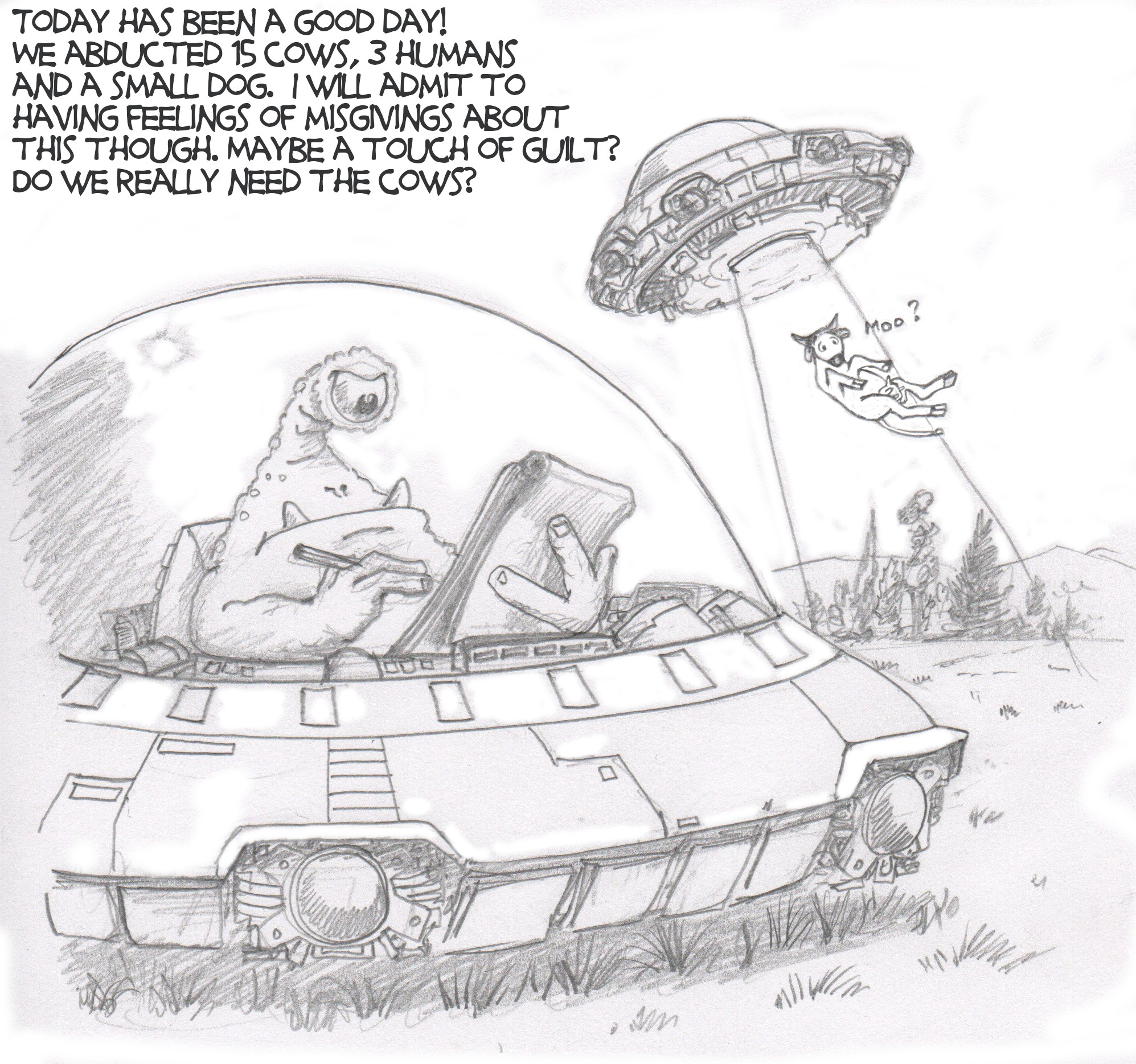

Journalling or keeping a diary, is a record that is regularly kept. It can be an account of your personal experiences, a record of your thoughts and ideas, or a log of your lists. It can be a useful tool on a whole host of fronts. On one hand it can be useful to help work out something about yourself, on the other it is a record of your life story. Personally, I’ve only ever kept a diary for a very short time before getting bored of it. Yes, I keep a diary of sorts which is a list of tasks I should check off each day, but never complete. I ascribe to the theory that if you never get to the end of your to-do list, you cannot die. I know my partner found it very useful to work out health cause and effects. In researching this topic I found a huge amount of material about Journalling that related to mental wellbeing and health. It often used to help work out how the writer feels about something, or to provide a framework for problem solving.
The other use of journalling is source material for writing memoirs, and for future researchers to write biographies. It is interesting to note that writers looking for material to inform their world building seek material that will provide the mundane details of the time they seek to write about.
Diarists tend to document unusual and memorable events but not the ordinary things they took for granted—the very things we fervently wish to know.
“Research and Storytelling for Successful Historical Fiction” - Janie Chang
So, maybe it is worth noting what you had for breakfast and describing the device that you checked your social feeds on. After all, it is the mundane details of Samuel Pepys’ diaries that are so valuable to historians – aside from the fact that he was in a good position to witness some significant historic events.
From thence to our horses, and with my wife went and rode through Sturbridge but the fair was almost done. So we did not ’light there at all, but went back to Cambridge, and there at the Beare we had some herrings, we and my brother, and after dinner set out for Brampton, where we come in very good time, and found all things well, and being somewhat weary, after some talk about tomorrow’s business with my father, we went to bed.
Samuel Pepys’ Diary for the 19th of September 1661
Types of Journalling
There are heaps of different types of journals. Most have some sort of focus, be it recording one’s life, mindfulness, dealing with depression, recording dreams, or planning and tracking personal goals. Just because there are many types of journals, doesn’t mean your journalling has to stay the same type as was when you started it. It might start out recording all sorts of day to day events, morph into an emotional diary if having to navigate some emotional event, then dive into planning, and then into yet another type of journal.
Here is a non-exhaustive list of types of journalling:
- Chronicle your day: This is a simple journal of the events of your day. It doesn’t need to delve into emotions or anything heavy. Re-reading these later can provide some unexpected amusement as you remind yourself of the way you were, and what you did and thought at the time.
- Morning Journalling: This is a considered journal for guiding you through your day with focus and clarity. It may include working through emotional shifts and challenges, or even thinking about strategies you intend to use to meet these challenges.
- Reflective Journalling: This type of journal is more about reflecting on what has happened during the day and is a chance to digest the events, your feelings and emotions, and to look forward, setting out your intentions for the next few days.
- Gratitude or Positive Journalling: This is a reflective journal focused on what has gone right in your day.
- Bullet Journalling: This type of journal is typically for analysing cause and effects as you work through some issue, or for planning. It is very short-hand and consists of a bullet point list of thoughts, ideas, and any other detail that may have an influence on whatever it is that you’re figuring out.
- Guided Journalling: There are heaps of guided journalling related websites which provide prompts and workbooks to help you work through specific themes. Some examples of the themes are; purpose, confidence, or wellness.
- Just Venting: It can be therapeutic to vent your anger and frustration onto a page. Doing this can allow you to untangle the issues and perhaps see a strategy for breaking them down into manageable chunks and coming up with a strategy for resolving them.
- Problem Solving: Journalling to solve problems is a way of applying a bit of discipline to the way you’re approaching an issue. It allows you to explain the problem in words, brainstorm ideas, and then plot the manageable steps to resolve the problem.
- Exploring Your Past: In this type of journalling, you’re looking at past events and seeing how they have some bearing on the present. Select a memory or time in your life and analyse how you felt at the time, how you feel about it now, and how it might be shaping your actions currently.
- Making Sense of Dreams: Recalling and writing down dreams can become a major undertaking if you have very detailed and complex dreams. The discipline of writing them down may also mean you remember your dreams better. Because dreams are the brain reprocessing the events of the day, the happenings and feelings of the previous day will help you decipher some of the images and feelings you experience in dreams, if you wish to analyse them.
- Brain Dumping: This is a bit like free writing where you set aside a limit (10 minutes or a page) and just write like mad or whatever you like. It can be just stream-of-consciousness.
Useful Things to Aid Your Journalling
Journalling prompts
Many of the types of journalling have online lists of prompts to help inspire or to help untangle your thoughts, and build self awareness. Journalling prompts are questions or guiding statements that help you know what to write about so you can reflect on emotions, relationships, values, and goals.
If you put “Journalling Prompts” into your favourite search engine you’ll be faced with a list of search results with titles like;
- 75 Journaling Prompts to Help You Start Writing Today
- 100+ Prompts for Mental Health, Anxiety, Gratitude, and More
- 100+ Journaling Ideas: Creative Prompts for Every Mood and Goal (2026)
- 555+ Deep Journaling Prompts for Mental Health
So, there’s no shortage of them. I have no doubt some of them have been created by AI, which is kinda ironic when you think about it, but they can still be useful. Here’s some examples of the type of prompts you’re likely to encounter.
- What are you grateful for today?
- What did you learn today?
- What are your goals and biggest priorities?
- What are you most afraid of?
- What values are most important to you?
- What are some positive qualities about yourself?
- What made you smile today?
- Do you feel guilt or shame for anything?
- Write down your first random thought.
- When you look in the mirror, what do you see?
Don’t Overthink it.
The idea is to get your thoughts down. There is no need for it to be a perfectly crafted piece of high literature. You don’t need to spell it right, you don’t need to finish your sentences, and you can leave your editing until never. Add doodles, lists, whatever works.
Sometimes it May be Uncomfortable.
If you’re analysing your emotions or locking horns with memories of tough situations, then it can get uncomfortable. In this case, make sure your surroundings are comfortable, and you can treat yourself while you work it through. You can always leave it in the journal and come back to it when you’re more ready. But the key thing is that you’ve left the worries in the journal and not carrying them around with you.
If You’re Worried Others Will Read It
This worry may put you off writing what you really need to write. There are various journalling Apps available which can be password protected. Documents and directories on your computer can all be password protected if you know how. In the pre-digital past some journallers have resorted to creating their own codes. If a journal has done its job, you can always destroy it.
Fictional Journalling
There are some people, myself included, who do not like journalling our personal lives. There are still ways of playing around with journalling, but in this case, the people, events, locations and even the entire world is all made up.
You can find many journalling games available for download. These typically set up a situation and then card draws and dice roles create prompts and events that your character(s) experience or are challenged with. You write the journal of their lives as they navigate the challenges and events. There are many different genre and levels of sophistication.
One of my favourites is “The Land and the People” by Bryon Casebolt in which you journal the fortunes of a cartographer commissioned to travel the land and map it out for a patron of some sort.
Another is “One Day at a Thyme” a cozy, whimsical solo journalling role playing game in which you play as someone living in a cottage in a forest or on a mountain. Cards are used to prompt the day to day events which you record in your journal. You can find it free here or for Pay What You Like, here.
Some solo journalling games can be quite dark with situations that are inescapably hopeless, or where the odds of you getting ahead are very remote. I’m not sure I quite understand why you would want to play these, but maybe the thought experiments build resilience … maybe?
Working through thoughts and emotions using fictional journalling.
Here’s a thought that occurred to me as I put this article together. I can’t say I’ve seen this technique described in any of the journalling articles I’ve researched.
If you have a situation or conundrum to work through but don’t want to write a journal about yourself, there is no reason you can’t give the same problem to your fictional characters and have them work it through. Using your characters as a proxy for yourself can give you some distance from the problem and more effectively deal with it. Just a thought.
Sources
- “Research and Storytelling for Successful Historical Fiction” - Janie Chang
- “The Diary of Samuel Pepys”
- “Journaling 101: Everything Absolute Beginners Need to Know”
- “A Guide to Journaling for Writers” - Melissa Donovan
- “The Ultimate Guide to Journaling” - Anna Borges
Writing Challenge: Journalling
There is no expectation for you to share your journalling exercise with the group.
Select a journalling type, and see if you can write at least three entries over three days. It may be worth setting a ten minute time limit if that helps manage the time.
For those who are not keen on journalling their own lives, then try out one of the fictional journalling games. The One Day at a Thyme cozy solo journalling role playing game is a nice easy one to try out. You can read the full rules here.
Alternatively if you’re after something a little more edgy you may like to try:
Last Tea Shop. You run a tea shop on the border of the living and the dead. The recently deceased visit for one last hot drink before their long journey into the Great Beyond. Record their thoughts, fears, dreams and hopes in your journal for posterity.
Long Haul 1983. It’s 1983, and the world feels hollowed out. Long Haul 1983 tells the story of a dangerous journey through an empty world.
You play a long-haul truck driver trying to make their way home. Every day, you’ll hit the road, navigating treacherous highways, fleeing from menacing threats, and dealing with the psychological impacts of isolation. And at the end of each day, you’ll find a payphone, make a call, and leave a message for the most important person in your life.
They never pick up. You never stop calling.
My response to this challenge is Corroded, a story based on the Long Haul 1983 game. Your can find it here: Corroded