Betrayal
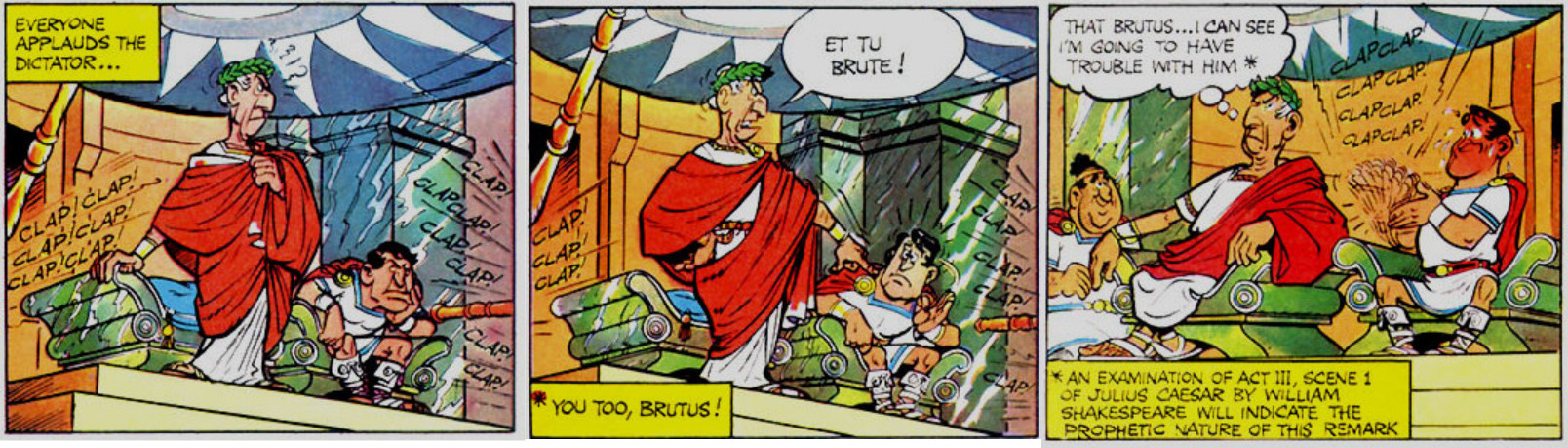
Julius Caesar and Brutus - Asterix the Gladiator - René Goscinny, Albert Uderzo.

Betrayal is one of the most powerful story elements you can load into your narrative. It creates conflict, tests the limits of loyalty, love and friendship, throws the characters into chaos, and shines a harsh light on their personalities when they are at their most stressed. It exposes their values, and motivations. The character’s entire world changes. It can shape the entire plot.
As authors we may look at all types of betrayal; personal, romantic, organisational, and political betrayals, depending on our stories.
Key Aspects of Betrayal
- Violation of Trust: Betrayal typically involves a breach of trust, where one party fails to uphold their commitments or expectations. This can be as big or small as your story demands.
- Impact: The consequences of betrayal can lead to feelings of anger, sadness, and confusion for those affected, or much larger scale damage in the case of betrayal at the organisational and national/galactic level.
Types of Betrayal:
- Personal Relationships: This includes actions like lying, infidelity, or breaking promises.
- Romantic Relationships: Betrayal can occur through infidelity, conditional commitment, or emotional disengagement.
- Organisational Contexts: Betrayal may involve supporting rival groups or failing to adhere to agreed-upon norms.
Setting up a Betrayal
A good betrayal (is there such a thing?) depends on setting things in motion early with subtle signals, that, maybe, the reader won’t necessarily notice at the time, but on re-reading or checking up on you, will see the signs have all been put in place. There is a balance that needs to be kept; too obvious, and the reader will see it coming a mile off, too subtle, and the reader will wonder, “Where did that come from?”
Foreshadowing
The greatest tool in your toolkit, is foreshadowing. Foreshadowing can be subtle or overt, but for the purpose of setting the reader up for a betrayal, foreshadowing tends to be subtle, unless you are setting up a comedic betrayal and want to make it so obvious to the readers that there is a betrayal on its way, and either subvert it, invert it, or induce cringe humour. Foreshowing and signalling an eventual betrayal can take many forms, including dialogue, body language, relationship with other characters, character motivations and desires, character backstory, setting, and symbolism.
There has to be a reason
Unless you are dealing with a completely pathological individual, there needs to be a reason for one character to betray another.
Through hints at backstory, or developing the relationship with the protagonist, the groundwork for the betrayal can be established, so that when it happens the reader will see that it makes sense for the betrayer according to their worldview and values. The reasons that character may betray another may include; fear, desperation, survival, greed, power, revenge, or opposing beliefs. Whatever it is, it must make sense for the character and their way of thinking.
There has to be a relationship to break
Through your story, developing the trusting relationship between the betrayer and the betrayed is essential for the betrayal to work. The closer the characters are, the more the betrayal hurts. If the protagonist is reliant on the eventual betrayer for something important like love, acceptance, or friendship, the removal of that support at a crucial time will intensify the emotional effect of the betrayal. Through developing this relationship well, the reader will become invested in your characters. They will empathise with, and understand both characters in the relationship.
Timing is Everything
Timing of the betrayal is everything. It can make or break the impact of the betrayal. It has to happen at a time that makes sense for the story and for the characters involved.
- Betrayal can strike when a character is at their highest point.
- Or it can push an already desperate character further into despair.
Don’t rush it. Give the betrayed character and the reader the information about the betrayal in stages if possible. Uncover it as the character discovers and experiences it. A good pattern to use, is the observation of something that doesn’t fit (maybe an uncharacteristic response from the betrayer for a relatively innocuous event or situation), then showing a pattern emerging, to reveal the betrayal. Use pacing tools, to slow the events around the betrayed character when they recognise what has happened.
The world doesn’t keep moving at full speed when someone’s reality has just cracked. Your prose should reflect that compression.
Using Symbolism and Metaphors
Symbolism and metaphors can add depth, and help convey the emotional and psychological impact of betrayal. Using symbols that signify trust, bonds, and loyalty that are then shown broken and corrupted will add a powerful emotional layer to the imagery you are building to express the effects of the betrayal.
Types of Betrayer
- The Remorseless/Narcissistic Betrayer: The betrayer acts with no remorse or regret. They are entitled and lack empathy.
- The Double Agent: The character appears loyal, kind, and trustworthy, often functioning as a close ally, and trusted companion of the soon-to-be-betrayed. In reality, they are the antagonist or planted by the antagonist. This betrayal can shatter the betrayed character. In some stories, the betrayer may have developed genuine feelings for the betrayed, and so they end up hurting themselves with the betrayal.
- The Jealous Friend: The jealous friend may feel inferior to the soon-to-be-betrayed, and it is out of jealousy, envy, or insecurity that they feel they need to satisfy their own ego by taking down their erstwhile friend.
- The Noble Traitor: The noble traitor who occupies a high position of trust sacrifices their honour, reputation, and sometimes their sanity, by betraying a government, kingdom, or person to prevent a greater evil. They see themselves as a necessary evil.
- The Reluctant Betrayer: In cases of dire provocation, a character may turn on the main character. An example of this is where the antagonist is threatening their loved ones or livelihood. After the betrayal, they are likely to become a tragic character riddled with guilt and emotionally damaged.
- The False Prophecy: A character carries out instructions to fulfill directives from some authority or prophesy, but then discover that they have been used by those in authority to advance their selfish designs.
- The Self-Betrayer: Fear of disapproval and a need for acceptance can lead a character to betray their own morals, values, and safety, in order to fit in.
- The Emotional or Physical Cheater: A character in an intimate relationship can betray the other member, when they share intimate thoughts and feelings with someone else or engage in physical intimacy with someone else.
The Betrayed Character’s Reaction
Capturing an authentic reaction to betrayal will ensure the reader is feeling what the betrayed character is feeling, and make the narrative more powerful.
Again, take your time. Stillness, is usually the first reaction, as the character suddenly realises what has happened and their brain is still too shocked to process it. As they begin to process the event and all those little signs and signals suddenly crystallise into the new pattern of having been betrayed, reveal their reactions, their thoughts, and emotions. Give them time to feel the wound.
The character’s reaction will reveal a lot about their personality, resilience, and their capacity for forgiveness or revenge. Maybe they’re the type to fall apart, or seek revenge, or turn the other cheek – whatever their reaction, your story will have some new possibilities to follow.
Showing the Impact
Take the reader with you as you explore the impacts of the betrayal. Mental impact comes first and is followed by the emotional impact and fallout.
- Mental Impact: Show how trust has been shattered, the character’s feelings of being played, and creeping doubt about everything where previously they had been secure in their knowledge about how the world was. To help share the character’s pain with your readers, show their mental struggles, their confusion, paranoia, and how they begin to question themselves.
- Emotional Impact: Loss, abandonment, grief, and desire for revenge. It helps to know a little about the five stages of grief; denial, anger, bargaining, depression, and acceptance - to help navigate the emotional fallout your character will be experiencing.
Different characters will react differently to the same betrayal, and exploring these individual reactions can add depth to your characters. The emotional aftermath can catalyse character growth and drive the plot forward.
Showing the Aftermath
A betrayal will reverberate throughout the story. It will set in motion other events and influence the character’s choices. Some changes will be positive, others negative, but character growth will happen as a result, as will plot progression.
The aftermath needs to be consistent with your world, the characters, and the nature of the betrayal.
Let’s Not Forget the Betrayer
The betrayer has also gone through some emotional changes as a result of their betrayal. Reflecting some of these changes will add depth to the character, and add authenticity. Maybe they will seek to atone for the betrayal, or maybe they feel they have scored a point in whatever tally they keep in their heads. It will depend on the type of betrayer they are.
Sources
- How to Describe Betrayal in Writing (21 Best Tips + Examples) by Christopher
- Writing Betrayal Scenes
- Betrayal in Fiction: How to Write Powerful, Unforgettable Twists by Amanda Patterson
- Dr. Wellington Yueh The Betrayer Who Healed – by Manrado Gorgio
- Betrayal Writing Prompts: 10 Story Ideas Full Of Conflict & Emotion by James
Writing Challenge: Betrayal
At risk of making this challenge “write a novel with a betrayal in it” we’ll try to limit it to a short story with a small betrayal in it, or write a scene where the main character’s world has just shattered because of a betrayal. Choose whatever genre works for you, and less than 2000 words, unless your story demands otherwise.
Have a think about what led to the betrayal; jealousy, fear, love, or desperation? You don’t need to spell this out in your story, but you’ll need it to inform the characters actions, reactions, emotional responses, and how the characters are changed.
The betrayal doesn’t have to be big and groundbreaking. Petty betrayals can be funny but also insightful.
Here are some suggested betrayals;
- A best man discovers the groom has been secretly planning to flee before the wedding.
- Two elderly sisters compete viciously over their late mother’s recipe book.
- A junior wizard discovers their mentor plagiarised every spell they ever published.
- A politician’s affair is uncovered by the electorate office one staff member who genuinely admired them.
- Someone reads a private diary and discovers the betrayal inside it is about them.
- Someone deliberately uses another person’s treasured teacup.
- A gardener moves a boundary stone ten centimetres.
- One sibling tells the other that Father’s watch was “lost” when in fact they kept it.
Here’s some irreversible reactions you may like to include;
| A message sent | A confession | A slap |
| A resignation | A duel challenge | Burning the evidence |
| Pressing “publish” | Opening the airlock | Announcing the engagement |
| Calling the police | Eating the last custard square out of spite |
Ace Trucking Company - Alan Grant, John Wagner, and Massimo Belardinelli